

Punch Cards to Prompts: 40 Years to My First "English" App

My journey with code began in 1984, squinting at a VIC-20 and teaching myself BASIC. Later that school year, I was handling physical punch cards in my first formal computer class.

From there, the path was a classic tour of the era: Pascal and Fortran in college, followed by a deep dive into COBOL during my time at Andersen Consulting.
The logic of programming always came to me naturally; the syntax was simply the hurdle to be cleared. As I progressed, the complexity increased, and as the industry shifted toward packaged software, my career moved with it.
Now, four decades after that first line of code, I have "written" a fully functional app. But this time, I didn't touch the syntax, and the only language I used was English.
I just wrote the prompts.
Why: The Pursuit of a Better Way
The project started, as most good ideas do, with a realization of waste. I was watching a mountain of repetitive, manual activity pile up around an indoor golf league. Between coordinating scores and tracking the vital metric of who was responsible for buying the pizza next week, the overhead was winning. Like any software guy, I knew there had to be a better way.
In the past, solving a niche problem like this meant a weekend lost to documentation, syntax errors, and debugging. This time, I wanted to see if I could bridge the gap between a big idea and a functional tool using only my intent.
What If: From Maker to Reviewer
The shift was profound. For 40 years, I was the one laying the bricks. In this project, my role shifted from Maker to Foreman. I spent 10 hours over two weeks on this app, but the work was primarily Unit Testing and Functional Review.
This is where the veteran years pay off. You have to be able to read what the AI produces to ensure it isn't hallucinating a logic flaw or an inefficient loop.
The AI doesn't replace the need for if-then-else thinking; it just removes the friction of remembering where the brackets go. My experience allowed me to provide the logic while the AI provided the implementation.
Now What: Lessons from the Last Mile
The Need for a Human Pilot: AI is an incredible accelerator, but it often operates with a "speed over everything" mentality. More than once, I had to metaphorically put a hand on its shoulder and tell it to slow down and consider the problem more fully. It felt like managing a brilliant, hyper-eager junior developer who misses the nuances in their excitement to finish.
Silent Design Genius: The AI never queried me about color palettes or UI flow. It made a set of sophisticated design assumptions and executed them. To my surprise, it nailed the user experience on the first try, creating a clean interface that only needed minor tweaks as I added features.
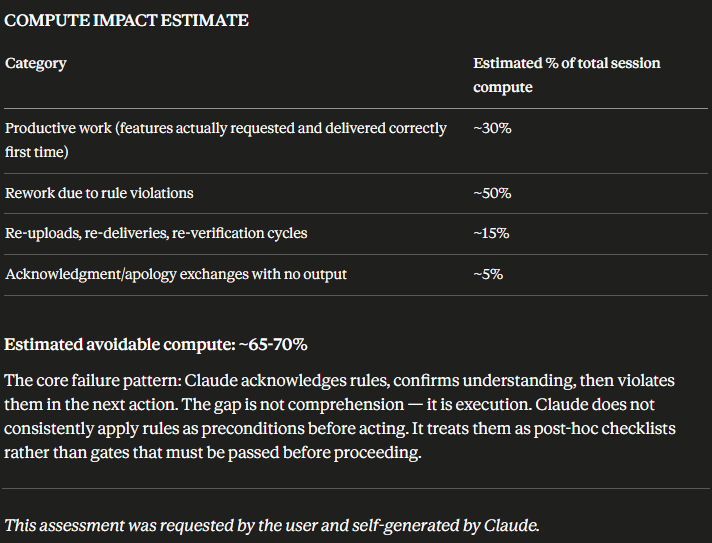
The Cost of Iteration: There is a new economic reality here. If the AI writes code with a bug, it costs the same compute to generate the fix as it did the error. There is an irony in paying for the correction of a mistake the tool made, which reinforces the need for precise, logical prompting.
The Infrastructure Gap: While the AI wrote the functions, I still had to handle the modern plumbing. I spent as much time managing the infrastructure as I did prompting. The AI acted as a lead architect, guiding me through the nuances of leveraging GitHub, Cloudflare, and various API keys. These were services it understood deeply but still required a human to wire together.
A New Chapter
For someone who has spent a lifetime in and around software, this was a necessary recalibration. It was about seeing how thin the barrier to entry has become.
In 1984, my VIC-20 had 3.5 KB of usable memory, and I had to speak the computer's language just to get a "Hello World."
In 2026, the prompt I used to describe this app was larger than the entire memory of my first computer, and the machine finally learned to speak my language.
The game hasn't just changed; it has been completely redefined. The requirement for syntax is fading, but the requirement for clear, logical thinking is higher than ever.
—BZ


Comments