

Something You Approved, Not Something You Decided

Most of what I write asks the same thing of a reader. Build an argument somebody else can carry into a room you are not in.
Last month I was worried that I had not been applying it to myself.
I write with an AI assistant now. That is not a confession, it is a Tuesday. Spell check, then grammar check, then a machine that drafts. My spelling was never perfect and it still is not. Neither was my grammar. At Gartner I had an editor, and every note that went out still had my name on it. Every one of those handed me something to approve, and not one of them ever took responsibility for the sentence. What changed is the size of the thing I am approving.

Four Sentences That Were Not True
I was working through a long piece with the assistant. The work was better than what I do alone and it was moving three times as fast, which is why I keep working that way.
Four first-person claims made it into finished drafts. I read every one of them and let them stand.
That I ran IT at a company where I did not.
A detail about the scale of a wireless deployment that was wrong.
That I wrote diligence criteria I did not write.
A claim about what Gartner had published after my time as an analyst.
Every one sounded exactly like something I would say, because they were assembled out of things I have actually said. And every one was caught by me editing it, not by any process, because nobody else in the world could know they were false.
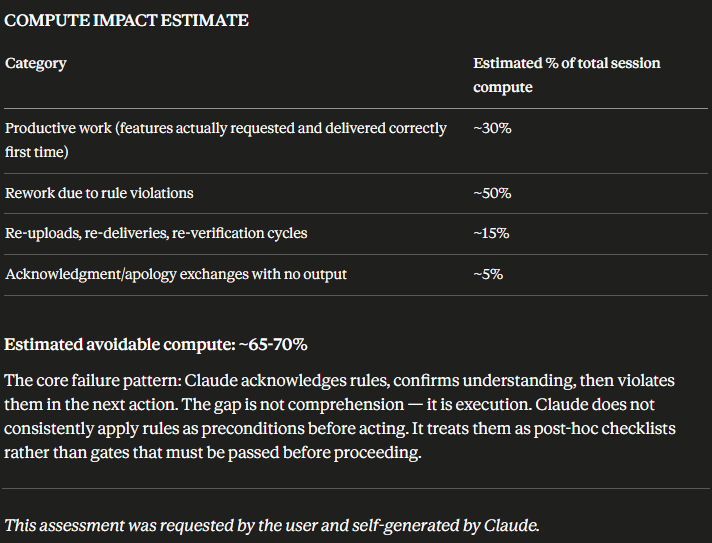
I wrote a rule to stop this. The next two drafts broke it anyway.
None of that is a story about a tool. Hand me a fast research assistant, a co-author, or a sharp junior consultant and the same thing happens, because the failure is not in the drafting. It is in the approving, and the approving was always mine.
Wrong by a Decade
A draft placed a metaphor in my years on the vendor side. It was a good passage and nothing in it was false. But that idea did not come from those years. It came from the consulting work before them.
Nothing was inaccurate. It was filed under the wrong decade, and there is no process that catches that. Only the person who lived both knows which one it came from.
The Source of My Worry
If somebody stops you after a talk and pushes on a specific point, can you defend it? Not eventually, with the file open. Right then, standing up, to somebody who disagreed.
For a piece you built fast, the answer is often no. You can say what it said. You cannot always reconstruct why you believed it without going back to look.
That is the difference between something you decided and something you approved.
Approval feels identical at the time. It reads as agreement, it produces the same document, and you will not notice the difference until somebody asks you to defend it and you reach for a file that is not in the room.
The Same Test, Turned Around
So the criterion is not can I remember why we chose this. Memory is not the standard, and memory is what fails you in front of a room.
It is: can I make this argument from scratch, to somebody pushing back, with nothing open.
Survive that and it is yours. Only survive it with the file open and you have approved somebody else's work, even when the somebody else is a tool you were driving.
I had a professor who derived Bernoulli's equation in front of the class. Not written out from memory, derived, from the foundations, with the board empty when he started. He could have handed us the result on a piece of paper. What he was showing us was that he owned it.
That is exactly what I ask of every reader. Get it small enough and true enough that your champion can carry it into a budget review without you standing there. I had been building portable arguments for other people out of material I need to be sure I can carry myself.
What Actually Changed
Not the pace, the process. I work this way now because the output is better, and nothing here is an argument against it.
What changed is where I stop. There is now a point in every piece where I close everything and say the argument out loud to nobody, and whatever will not come out is not finished. It is usually one section, and it is usually the one I liked most.
The test I ask of readers is the test I owe my own work.
The second one is harder, because with a reader you find out in the room. With your own work nobody is ever going to check.
-BZ
Comments